About Brian Teller
The voice behind Ship It Weekly.
- 53Episodes published
- 25+Years in production
- 2Industry ambassadorships
The story behind Ship It Weekly
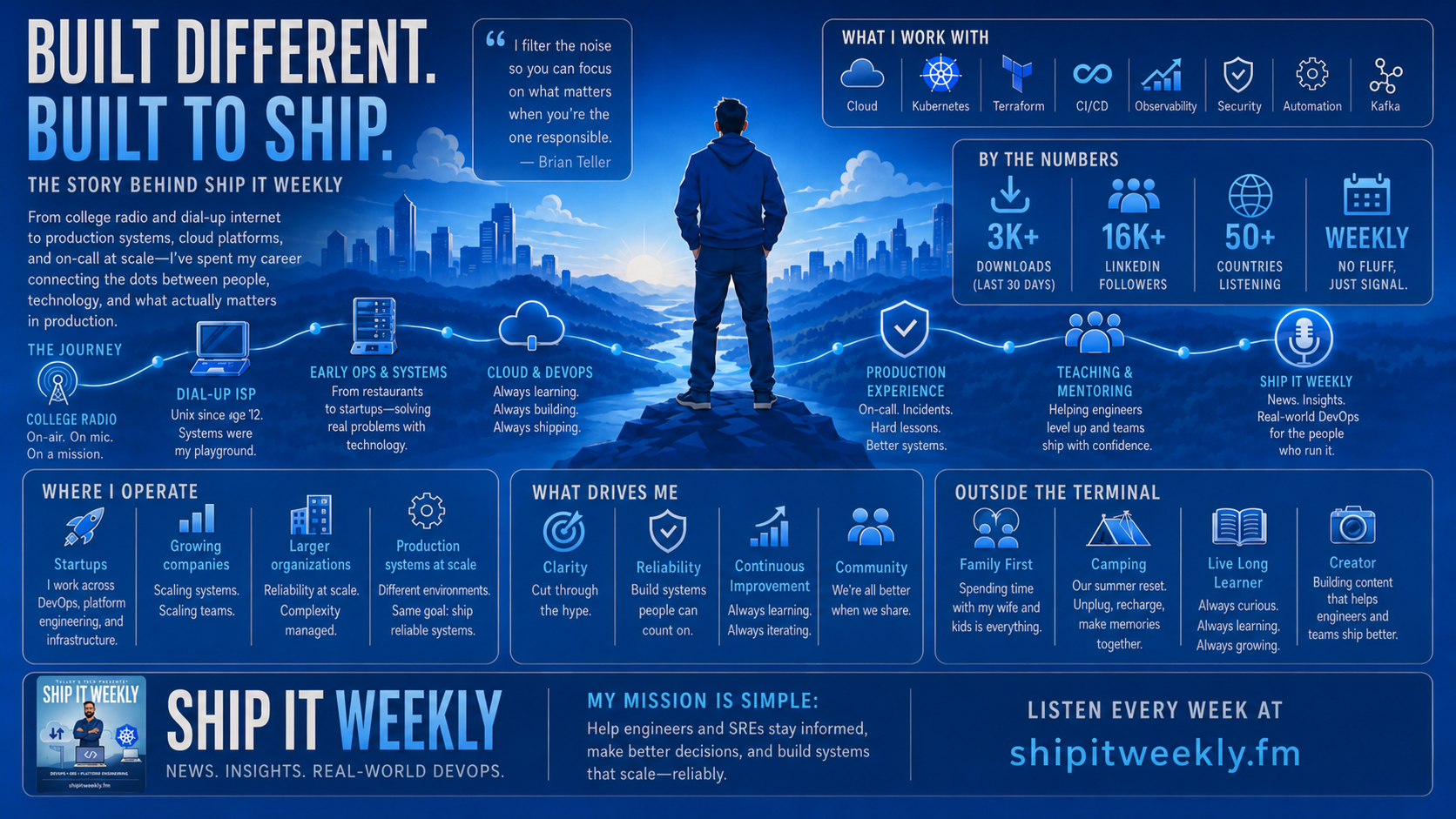
The short version, at a glance — the career, the toolkit, and the mission behind the show. The full story is just below.

Why Ship It Weekly exists
Brian started Ship It Weekly because most tech news does a decent job saying what happened, but not always why it matters to the people who actually have to run the systems afterward. A new cloud feature, a GitHub outage, a security advisory, an AI tooling release, a supply chain incident, a Kubernetes change, or a weird platform failure can all sound interesting in a headline. For the people on-call, managing infra, supporting developers, watching costs, and trying not to break production on a Friday, the real question is usually simpler: What does this mean for my team? That is the lens Brian brings to every episode.
Brian has spent years working in real production environments across cloud, infrastructure, automation, and reliability. Day-to-day work has covered Terraform and Terragrunt, AWS, Kubernetes, EKS, Kafka, CI/CD, GitHub, incident response, infrastructure guardrails, cost management, platform patterns, and the messy operational details that rarely show up in clean conference demos. Brian has worked as both a hands-on engineer and a technical mentor, helping teams make better decisions around infrastructure design, reliability, security, and delivery.
Ship It Weekly is built for the engineers, SREs, platform teams, DevOps folks, cloud engineers, technical leaders, and curious practitioners who want more than a headline recap. The show filters the noise down to the stories that matter for infrastructure, reliability, security, cost, engineering workflows, and production operations. Some weeks that means a major outage. Some weeks it means digging into GitHub Actions, AI agents, Terraform, Kubernetes, AWS, supply chain risk, or why a "small" tooling change can become a very big production problem.
Brian's style is practical, opinionated, and grounded in the reality of doing the work—not trying to sound like an analyst reading market notes. The focus is tradeoffs, failure modes, operational risk, team impact, and the "okay, what should we actually do with this?" part that often gets skipped.
That usually means asking questions like: Does this change how we build pipelines? Does this affect our blast radius? Should we be tightening permissions? Is this a real platform shift, or just vendor noise? What would I want my team to know before this becomes our incident?
Outside Ship It Weekly, Brian creates DevOps and cloud engineering content through Teller's Tech, with a focus on practical education instead of lab-only demos. The goal is to help engineers connect concepts to the kind of decisions they actually face in production: how to structure Terraform, how to think about reliability, how to avoid fragile automation, how to use AI without outsourcing judgment, and how to build systems that teams can safely operate over time.
At its core, Brian's work is about making infrastructure and operations conversations more useful. Less hype. Less vague "best practices." More context, more judgment, and more respect for the people carrying the pager.
Track record: production systems, leadership, and communication
Production infrastructure
Brian has co-led large-scale AWS → GCP migrations and owned Kafka platform engineering through vendor transitions (Confluent Cloud → MSK → Confluent Cloud with private networking), including Schema Registry and MirrorMaker2 / Replicator during cutover windows. He has supported public-company readiness from an infrastructure and platform angle, run SOC2 evidence programs across multiple audit cycles, and helped prepare teams for SOX expectations. Earlier in his career he operated AWS at depth and contributed heavily to PCI and SOC2 programs in HIPAA-certified environments, and he has led disaster recovery work with explicit RTO/RPO targets. As CTO of a digital-signage company, he led a zero-downtime migration to the cloud.
Leadership under pressure
Brian has operated as CTO and engineering manager, leading technical programs where clarity and accountability matter as much as architecture. Earlier leadership experience included running high-volume restaurant operations with teams up to ~60. Different domain, same lessons in shift orchestration, standards under stress, and customer-visible incidents when something breaks in front of the customer.
Early technical roots
Brian's first paid work in tech came during high school at fred.net (later xecu.net), a Frederick-area dial-up ISP doing front-line support, Unix administration, colo, and customer website hosting. In high school he also managed Unix mail servers and was president of the web club. He has been doing production-minded tech work since before DevOps was a job title.
Broadcast and communication
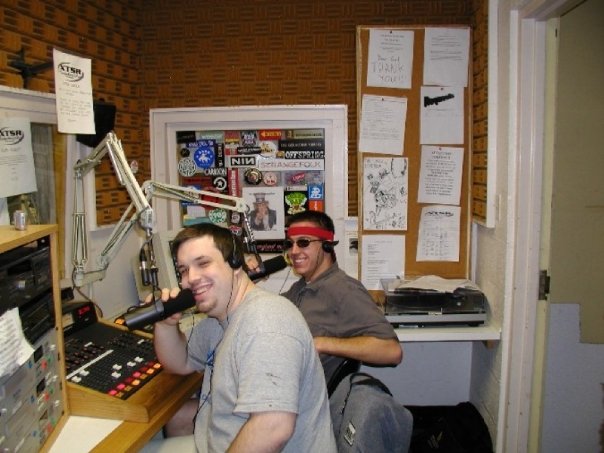
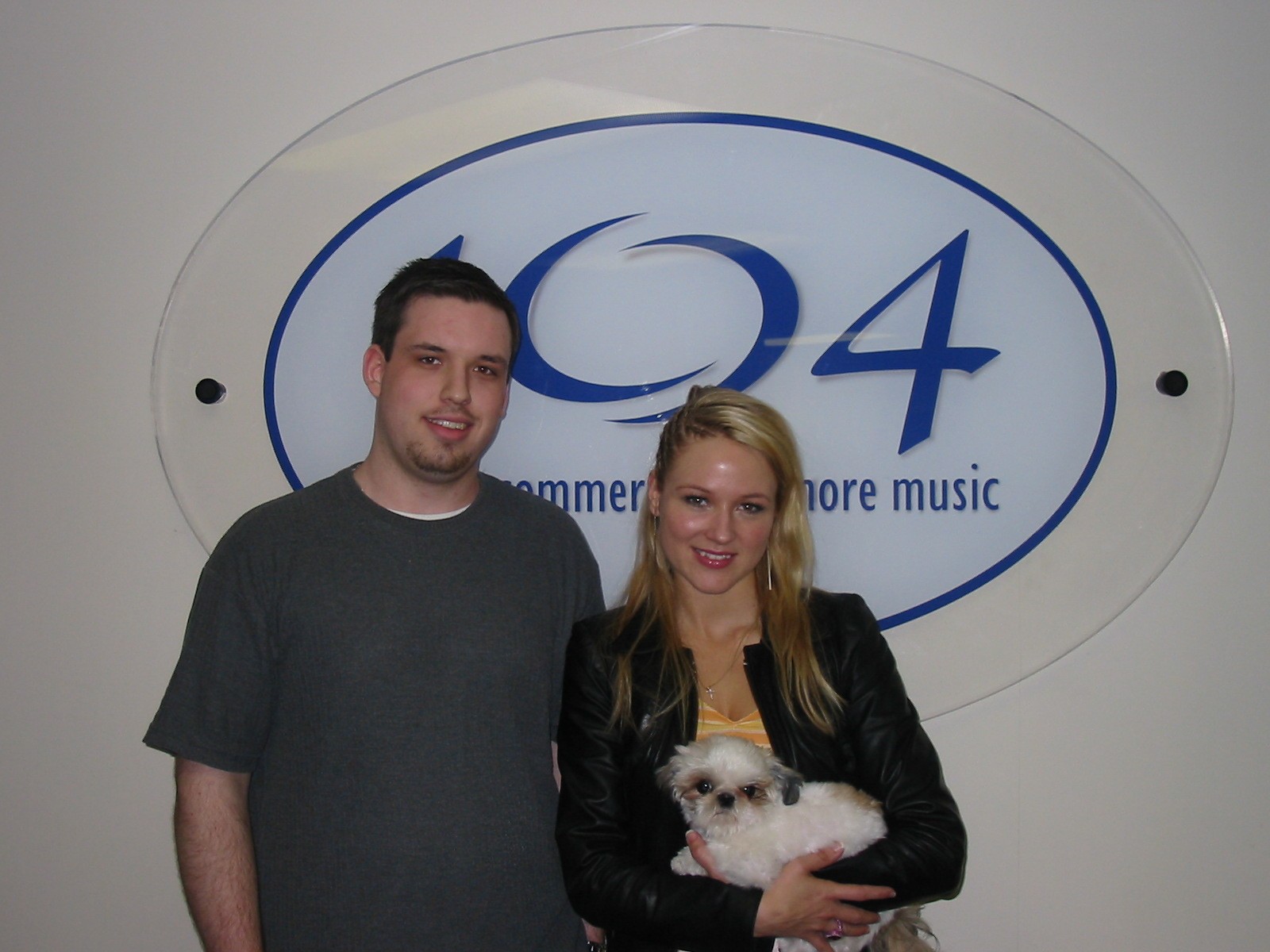
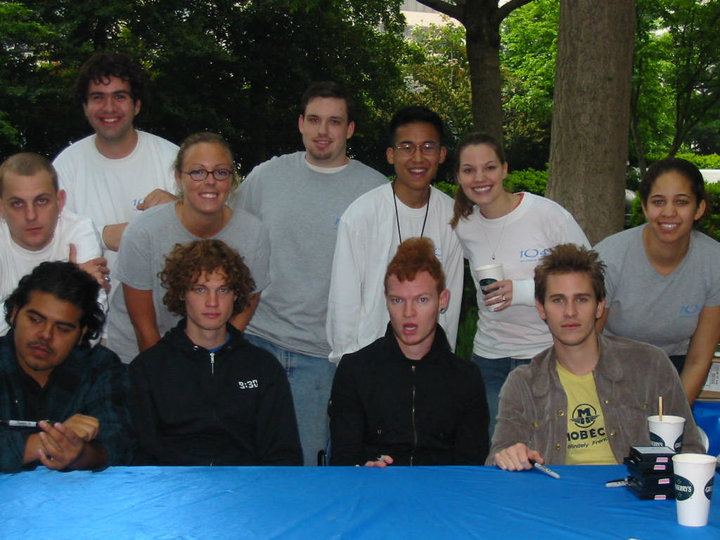
Brian came up through radio: a college show on XTSR at Towson University with a dormmate; intern to associate morning show producer at a major Washington, DC station (then Z104 / WWVZ–WWZZ); hosted evening (7–11pm) and Sunday mornings on Key 103.1 in Frederick, Maryland; and spent years as a mobile DJ for schools, weddings, and events. Live timing, reading a room, and staying composed when things break on air. Photos and audio from that era are below in On air & behind the mic.
Outside work
Brian coaches youth football. Married, four kids. Fundamentals, repetition, and calm communication carry the same whether you are on a sideline, in a war room, or at the dinner table.
On air & behind the mic
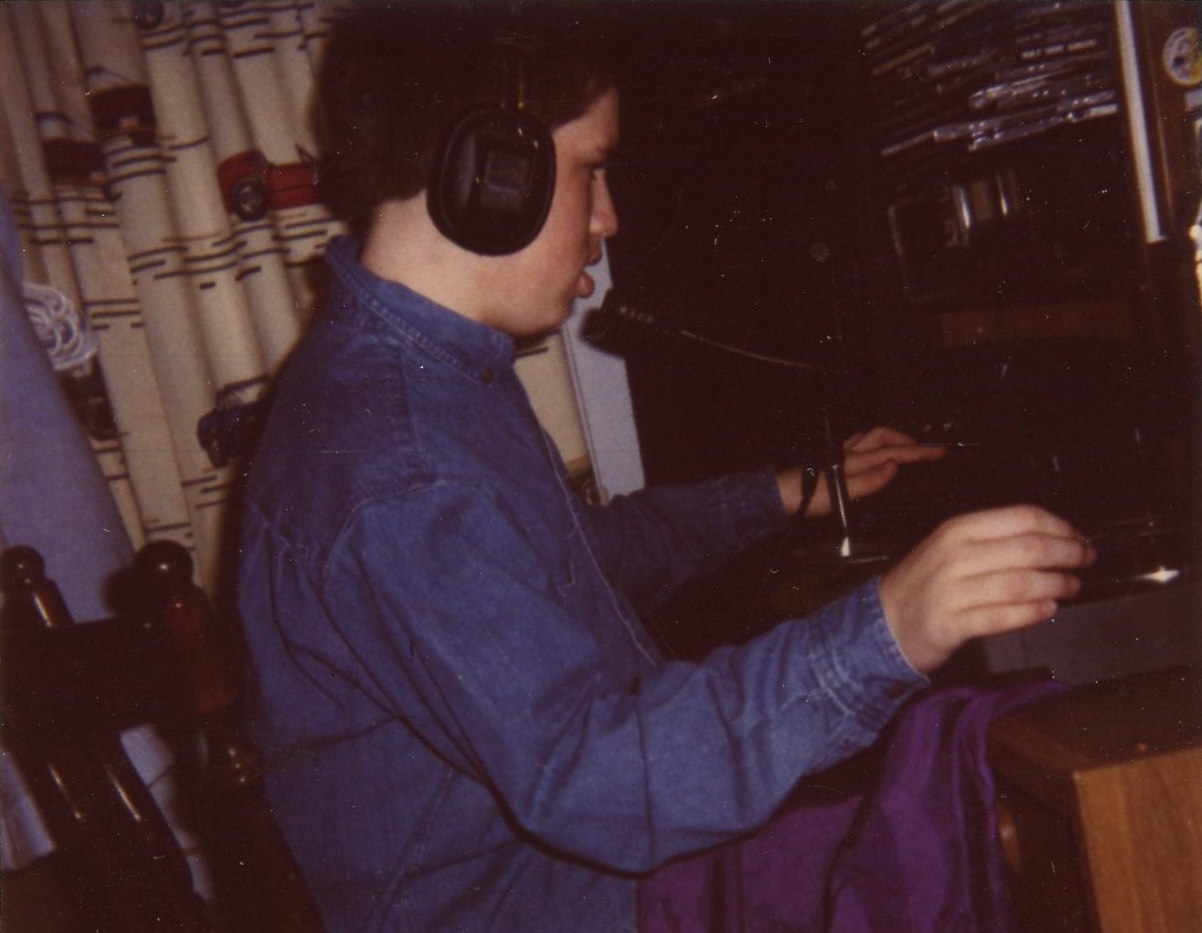
Before infrastructure leadership and podcast hosting, Brian came up through college radio, major-market production in Washington, DC, and Frederick’s Key 103.1 — plus years as a mobile DJ. The photos and audio clips below are archive samples from that era (roughly 15–20 years ago). For how he sounds today on DevOps and platform topics, listen to Ship It Weekly.

Audio samples
-
XTSR promo
Junior year at Towson University — college show on XTSR with a dormmate.
-
Quiznos commercial
Key 103.1, Frederick, Maryland — on-air commercial voice work.
-
Carroll Manor Fire Company commercial
Key 103.1, Frederick, Maryland — on-air commercial voice work.
-
Pentagon area report (September 13, 2001)
Z104 (Washington, DC) — news intern coverage after 9/11, including a bomb-threat situation on 9/13/2001.
What I cover on Ship It Weekly
- DevOps
- Site Reliability Engineering
- Platform Engineering
- AI in Operations
- Cloud Engineering
- CI/CD
- Observability
- Incident Response
- Kubernetes
- Infrastructure as Code
- Production Engineering
Available for talks & engagements
Brian also speaks at conferences, internal engineering all-hands, leadership offsites, and on podcasts — same operator-focused lens, in person.
Currently writing
Confidently Wrong — a practical book for DevOps, SRE, platform, and infrastructure engineers on using AI safely across Terraform, Kubernetes, CI/CD, agentic workflows, and operational decisions. Same operator lens you hear on the show, in long form.
Building in the labs
Teller's Tech Labs is where I build practical tools and training systems for DevOps, SRE, platform engineering, and AI-era operational judgment. Flagship: Code Duck, an AI-driven incident simulator that helps engineers practice production judgment without breaking production. Currently in early access.
Also runs
lmgt.org and lmgt.com — long-running “let me google that” pages that send a steady trickle of search traffic back to Ship It Weekly and this bio. Built once, maintained occasionally, useful indefinitely.
Recent episodes
EKS Rollbacks, GitHub Actions Supply Chain Attacks, AI Agentjacking, CloudWatch Log Alarms, and Why Safety Nets Don’t Replace Ownership
This episode of Ship It Weekly discusses Amazon EKS's new Kubernetes version rollbacks, GitHub Actions supply chain risks, and AI agentjacking via fake telemetry.
Ship It Conversations: Evan Phoenix of Miren on Deployment Pain, Terraform, Waypoint, and Better Defaults for Small Teams
In this episode, Evan Phoenix of Miren discusses the persistent pain points in deployment for small teams and the need for better defaults rather than more complexity.
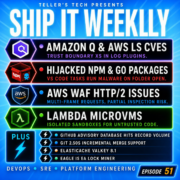
Amazon Q CVEs, Hijacked npm and Go Packages, AWS WAF HTTP/2 Issues, Lambda MicroVMs, and Why Execution Is the Boundary Now
This episode of Ship It Weekly discusses critical CVEs affecting Amazon Q Developer and AWS language servers, highlighting trust-boundary issues.
Listen wherever you get podcasts
Rep the show — Shop SIW merch.
Never miss an episode
New episodes weekly. Real conversations and news for engineers running production systems.
Find Ship It Weekly on your platform →Work with me
Be a Guest
Want to share your DevOps journey on Ship It Weekly? We're looking for passionate engineers to interview!
Apply to be a Guest →Become a Sponsor
Reach thousands of DevOps, Platform, and Cloud Engineering professionals. Partner with Ship It Weekly!
Talk Sponsorship →Connect with Teller's Tech
Follow the show on the platforms where the conversation actually happens.
Practitioner conversations
Where Brian shows up in practitioner threads: recent Reddit replies from /u/tellerstech across the engineering subreddits. Comments only — episode posts and self-promotion threads are filtered out.
-
Re: The whole frontend + backend + db split in k8s, help
Yep, thats basically it. Already a lot of good advice in here so I’ll keep it short:
View thread on Reddit →
Frontend, backend, and DB should all be separate. Backend talks to the DB through a Service, config goes in ConfigMaps/Secrets.
For learning, I’d run Postgres in the cluster first using a StatefulSet + PVC. You’ll learn a lot more that way. Then move to CloudNativePG or RDS once you’ve got the basics down. -
Re: Is it still worth pursuing DevOps/Platform Engineering in 2026 as a newcomer?
Yep.
View thread on Reddit →
AI is changing the job, not replacing it. Someone still has to build the platforms, secure them, debug them at 2am, manage cloud costs, and figure out why prod is on fire.
I’d focus less on collecting tools and more on understanding systems. Linux, networking, Git, containers, cloud, troubleshooting, observability, and scripting will take you a lot further than chasing every new AI framework.
The junior market is definitely tougher than it was a few years ago, but if I wa... -
Re: Devops vs Infra vs Platform Engineer, etc?
Titles are kinda messy tbh.
View thread on Reddit →
DevOps, Infra, Platform, SRE-ish roles can mean totally different things depending on the company. At one place Platform means building internal tooling and paved roads. At another it’s just Terraform/K8s/on-call with a newer title.
What you listed definitely sounds in that infra/platform/devops lane though. CI/CD, Packer, Terraform, K8s, Helm, observability, AWS accounts, Linux, etc. Pretty normal for those teams to own a weirdly wide surface area... -
Re: Got a DevOps interview tomorrow but I’m from support/ops background, what should I prepare?
Lean into the support/ops background. Thats honestly a good thing.
View thread on Reddit →
DevOps is a lot of Linux, logs, permissions, networking/DNS weirdness, and figuring out why stuff broke.
Skim Git, Docker basics, CI/CD basics, and cloud/IAM. Don’t fake deep K8s/Terraform knowledge if your not there yet. Just be honest and explain how you’d debug it.
Have 1-2 good stories ready where you fixed something messy or automated annoying work. You’re prob closer than you think. -
Re: AI projects in our field...because we have to
IMO building something like an Incident/postmortem helper is probably the easiest win. Feed it alerts, deploys, Slack/Jira notes, and runbook links, then have it draft a timeline, summary, “stuff to check,” and follow-up tickets.
View thread on Reddit →
Looks useful to leadership, might actually save SREs time, and it doesn’t get to touch prod.
Other easy ones... runbook search, alert explainer, on-call handoff summary, or Terraform/Helm PR reviewer.
Basically: make it close to toil, far from aut... -
Re: AWS DynamoDB was down for hours on June 28 while the status page said "operating normally." Cost us 3 hours of assuming it was our fault.
Makes me miss https://stop.lying.cloud/
View thread on Reddit → -
Re: 30yo beginner here
Yeah networking is def one of the harder parts imo.
View thread on Reddit →
I wouldn’t try to learn it like you’re studying for a full networking cert right away. For DevOps, I’d start with the stuff you’ll see all the time.
IP addresses, CIDR/subnets, DNS, ports, HTTP/HTTPS, TCP vs UDP, firewalls/security groups, load balancers, NAT, TLS/certs, that kinda stuff.
Once that starts making sense, a lot of cloud/devops stuff clicks way easier. Like why your app can’t hit the DB, why the load bala... -
Re: Is anybody passing tfvars as TF_VAR* environment variables in Github Actions? (via secrets or gh variables for example)
Yeah I prob wouldn’t do this as the main pattern tbh.
View thread on Reddit →
Like TF\_VAR\_\* works, so it’s not wrong exactly, but using GitHub Actions env vars / secrets as your whole tfvars layer feels like it gets messy fast. Especially once you have multiple envs, a bunch of values, approvals, drift between repos, etc.
For normal config I’d rather keep it in tfvars or whatever your env config pattern is, so changes still go through PRs and are easy to review.
For actual secrets, I’d try n...